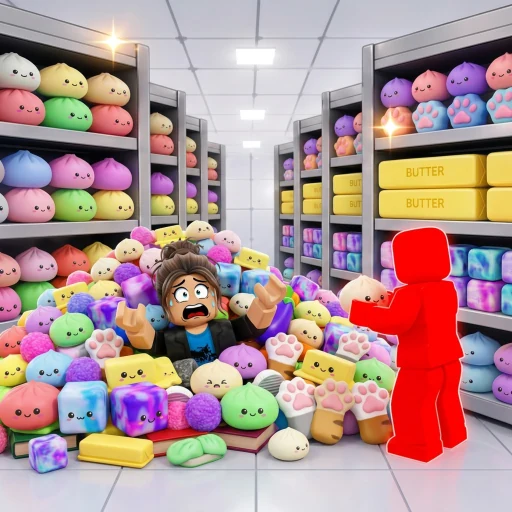
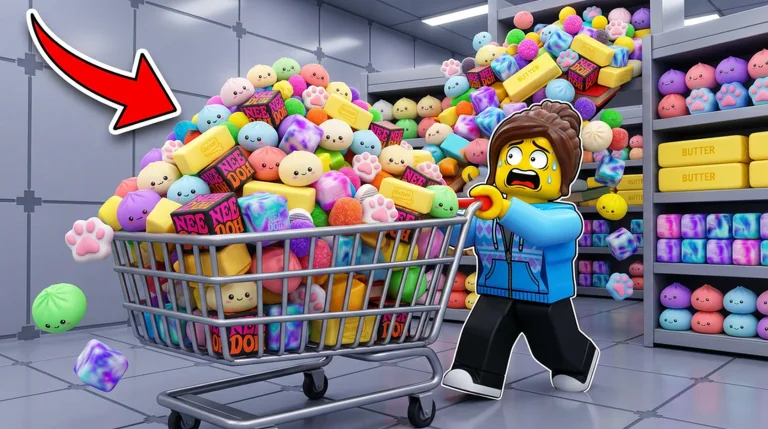
Start with a short category list
Community walkthrough coverage specifically calls out Animals, Dumplings, Food, and Mochi as practical early cleanup groups. Animals are often easier to recognize in a mess, while the other listed groups can become straightforward once a shelf or row is visible.
This is not presented as a complete official catalog. The game itself remains the source of truth for the category label and matching shelf when an item is unclear.
Sort for clarity, not just distance
The nearest squishy is not always the best pickup. Taking one or two types at a time reduces mixed inventory and makes your next shelf choice more obvious. Completing a local display can also open sightlines that make the remaining pile easier to read.
If two nearby categories look similar, slow down long enough to read the in-game prompt rather than forcing a guess. A wrong trip costs more than a short check.
Keep the route flexible
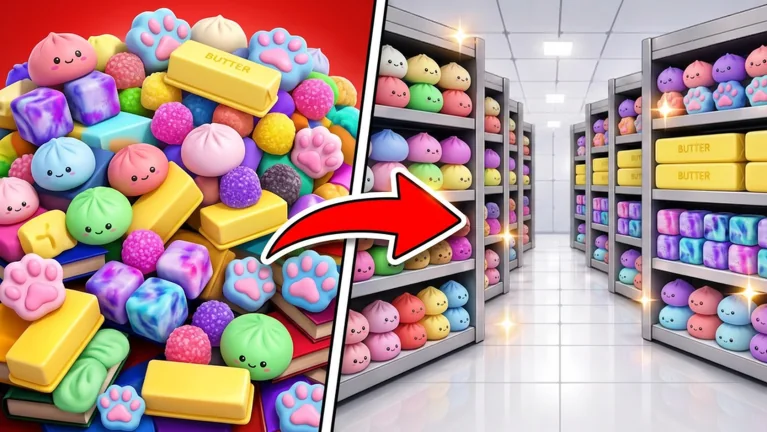
A good route changes with the state of the shop. When a large, recognizable group is blocking the view, clear it. When a shelf is nearly complete, finish it. When carrying is the issue, return to the display before grabbing more items.
Use the shop itself as the sorting reference. A category name in a guide helps you decide what to inspect first, but the visible in-game label and destination shelf decide whether a placement is correct. That distinction matters when items share colors, shapes, or a similar toy style. Slowing down for one label check is usually cheaper than carrying a mixed selection through several aisles.
A simple reset can save a messy run. Drop or place the item you no longer understand, finish the nearest known match, then choose only one new group from the floor. This rebuilds a clear mental map of what is in your hands and which shelf you are approaching. It also makes a later capacity or movement upgrade easier to evaluate because the route is not changing at the same time.